
 By Andrew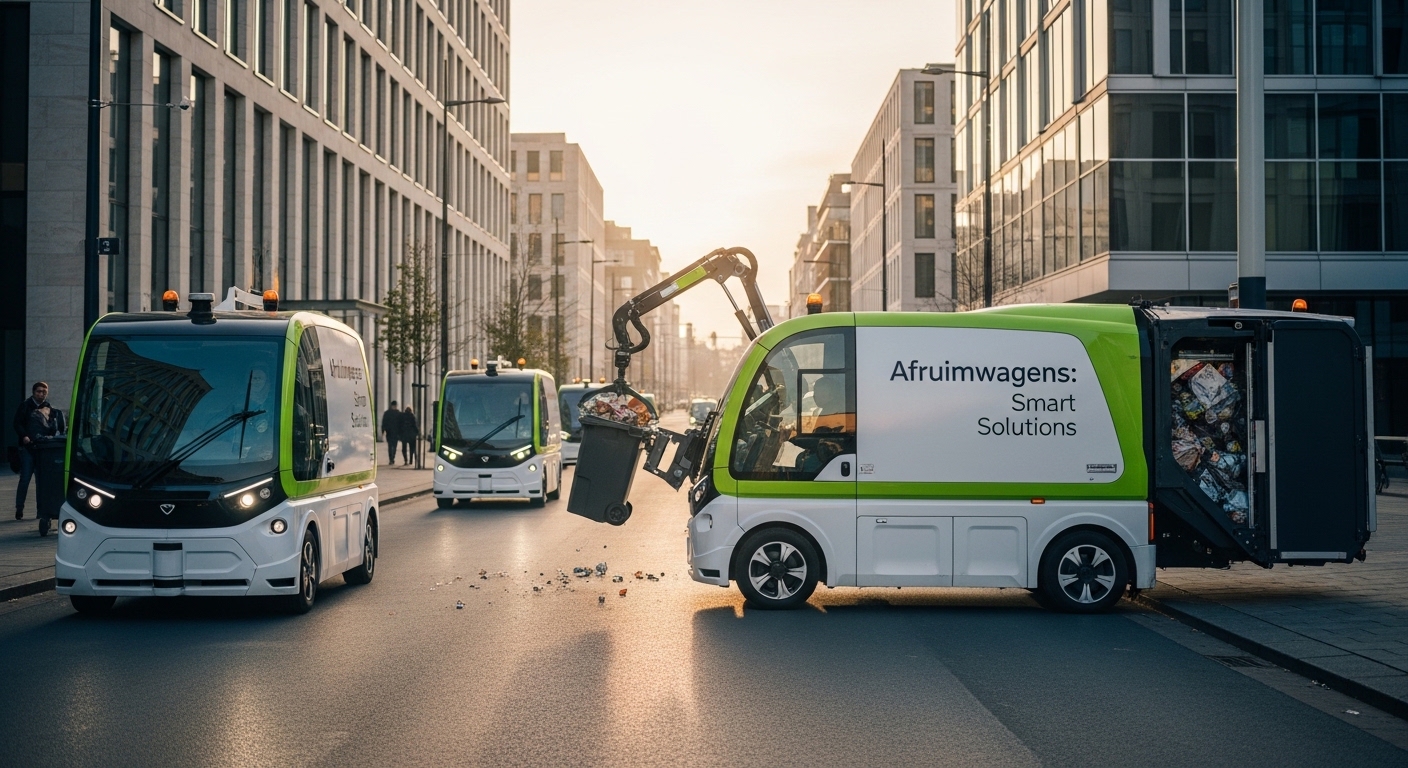
On a cold morning in a bustling European distribution hub, a warehouse manager stood watching a row of compact vehicles glide silently between towering shelves. There was no noise, no exhaust, and almost no human intervention—just a synchronized movement of machines performing what used to take dozens of workers hours to complete. What caught his attention wasn’t just the efficiency, but the subtle shift in how work itself was being redefined. At the center of this transformation was a concept that many outside the logistics world had barely heard of: afruimwagens.
In an era where supply chains are under relentless pressure to become faster, cleaner, and more resilient, afruimwagens are emerging as an essential yet understated innovation. They are not flashy like autonomous trucks or as widely discussed as drone deliveries, but their impact is quietly profound.
Understanding Afruimwagens in a Modern Context
At its core, the term “afruimwagens” refers to specialized clearing or transport vehicles designed to move goods efficiently within confined or structured environments such as warehouses, distribution centers, and industrial facilities. While the concept may sound straightforward, the modern evolution of afruimwagens tells a much deeper story one that intersects with automation, sustainability, and operational intelligence.
Historically, warehouses relied heavily on manual labor and basic mechanical tools. Forklifts, hand trucks, and conveyor belts dominated the landscape. Afruimwagens, in their early form, were simply practical tools designed to move items from one point to another. But over time, as logistics grew more complex and customer expectations shifted toward instant delivery, these vehicles began to evolve.
Today’s afruimwagens are often integrated with advanced sensors, AI-driven navigation systems, and real-time data analytics. They are no longer just tools; they are part of an interconnected ecosystem that defines modern logistics infrastructure.
The Shift from Utility to Intelligence
The transformation of afruimwagens mirrors a broader trend in technology—the shift from utility to intelligence. In the past, efficiency was measured by speed and capacity. Now, it is defined by adaptability, precision, and data-driven decision-making.
Modern afruimwagens can dynamically adjust their routes based on warehouse congestion, prioritize urgent shipments, and even communicate with other machines to optimize workflow. This level of coordination reduces bottlenecks and significantly improves operational efficiency.
What makes this shift particularly compelling is how seamlessly it integrates into existing systems. Companies don’t need to overhaul their entire infrastructure overnight. Instead, afruimwagens can be introduced incrementally, allowing businesses to scale their capabilities without disrupting daily operations.
Real-World Relevance for Entrepreneurs and Founders
For entrepreneurs and founders, the rise of afruimwagens represents both an opportunity and a challenge. On one hand, these systems offer a clear path to operational excellence. On the other, they require a new way of thinking about logistics and workforce management.
Consider a mid-sized e-commerce company experiencing rapid growth. As order volumes increase, the limitations of manual processes become evident. Delays, errors, and rising labor costs start to erode margins. Implementing afruimwagens can address these issues, but it also demands a strategic approach.
Founders must evaluate not only the immediate benefits but also the long-term implications. How will automation affect workforce dynamics? What kind of training will employees need? How can data generated by afruimwagens be leveraged to drive further innovation? These are not just operational questions they are strategic decisions that can define the trajectory of a business.
The Sustainability Factor
One of the most compelling aspects of afruimwagens is their contribution to sustainability. As global attention shifts toward reducing carbon footprints, logistics operations are under increasing scrutiny. Traditional warehouse vehicles often rely on fossil fuels, contributing to emissions and environmental degradation. In contrast, many modern afruimwagens are electric, energy-efficient, and designed with sustainability in mind.
But the impact goes beyond emissions. By optimizing routes and reducing idle time, afruimwagens minimize energy consumption. They also reduce waste by improving inventory management and decreasing the likelihood of damaged goods. For companies aiming to align with environmental goals, afruimwagens offer a practical and measurable way to make progress.
Integration with Smart Warehousing
Afruimwagens are not standalone innovations; they are a critical component of the broader smart warehouse ecosystem. This ecosystem includes technologies such as IoT sensors, automated storage and retrieval systems (AS/RS), and warehouse management software.
The true power of afruimwagens emerges when they are integrated into this network. Data flows seamlessly between systems, enabling real-time visibility and control. Managers can monitor operations from a centralized dashboard, making informed decisions based on accurate, up-to-date information.
This level of integration transforms warehouses from static storage spaces into dynamic, intelligent environments. It allows businesses to respond quickly to changes in demand, optimize resource allocation, and maintain high levels of efficiency even under pressure.
A Comparative Perspective
To better understand the role of afruimwagens, it helps to compare them with traditional warehouse transport solutions:
| Feature | Traditional Methods | Afruimwagens |
|---|---|---|
| Navigation | Manual or fixed routes | Autonomous and adaptive |
| Efficiency | Moderate | High and continuously optimized |
| Labor Dependency | High | Reduced |
| Environmental Impact | Often high | Lower with electric models |
| Data Integration | Limited | Fully integrated with systems |
| Scalability | Challenging | Easily scalable |
This comparison highlights not just incremental improvements, but a fundamental shift in how logistics operations are designed and executed.
Challenges and Considerations
Despite their advantages, afruimwagens are not without challenges. Implementation requires careful planning and investment. Companies must assess their existing infrastructure, identify potential bottlenecks, and ensure compatibility with new technologies.
There is also the human factor to consider. Automation can create uncertainty among employees, particularly those whose roles may be affected. Addressing these concerns requires transparent communication and a commitment to reskilling and upskilling the workforce.
Cybersecurity is another critical consideration. As afruimwagens become more connected, they also become potential targets for cyber threats. Ensuring robust security measures is essential to protect both data and operations.
The Future of Afruimwagens
Looking ahead, the evolution of afruimwagens is likely to accelerate. Advances in artificial intelligence, machine learning, and robotics will continue to enhance their capabilities.
We can expect to see even greater levels of autonomy, with afruimwagens capable of making complex decisions without human intervention. Integration with emerging technologies such as digital twins and predictive analytics will further enhance their effectiveness.
Moreover, as costs decrease and accessibility improves, afruimwagens will become a viable option for smaller businesses, not just large enterprises. This democratization of technology has the potential to level the playing field, enabling more companies to compete in an increasingly demanding market.
A Broader Reflection on Innovation
The story of afruimwagens is not just about logistics it is a reflection of how innovation often unfolds. The most impactful changes are not always the most visible. They happen quietly, in the background, reshaping systems and redefining possibilities.
For tech readers and industry leaders, this serves as a reminder to look beyond the headlines. True innovation often lies in the details in the tools and processes that make everything else possible.
Afruimwagens may not capture public imagination in the same way as self-driving cars or space exploration, but their influence is undeniable. They are a testament to the power of incremental innovation and the importance of continuous improvement.
Conclusion: A Subtle but Powerful Transformation
As the warehouse manager watched those silent vehicles move with precision and purpose, he realized he was witnessing more than just a technological upgrade. It was a glimpse into the future of work a future where efficiency, intelligence, and sustainability converge.
Afruimwagens represent a subtle yet powerful transformation in logistics. They embody the shift toward smarter, more responsive systems that can adapt to the demands of a rapidly changing world.
For entrepreneurs, founders, and tech professionals, the message is clear: the future belongs to those who can recognize and harness these quiet innovations. In doing so, they not only improve their operations but also contribute to a more efficient and sustainable global economy.